


What if your brand could emerge stronger from a crisis instead of crumbling under pressure? In today’s fast-paced digital world, the reality of facing a brand reputation crisis is no longer a distant possibility—it’s a certainty for many organizations. The fear of reputational damage can be paralyzing, especially when you’re uncertain about how to respond effectively. This is where mastering brand reputation crisis management becomes crucial. In this guide, you’ll learn essential steps and strategies that can help you handle crises with confidence, minimizing damage to your reputation while enhancing your preparedness for future challenges. Get ready to transform your approach to crisis management and safeguard your brand’s legacy.
Key Takeaways
- Understand the significance of brand reputation and the various crises that can threaten it, setting the foundation for effective management.
- Establish a dedicated crisis management team and develop a robust crisis management plan to ensure a swift and organized response.
- Incorporate technology, such as social listening tools, to monitor brand sentiment and facilitate rapid communication during a crisis.
- Learn from real-world case studies to identify successful strategies in brand reputation crisis management that can guide your own approach.
- Post-crisis, evaluate your response and implement necessary changes to rebuild trust and prevent future reputational damage.
Understanding Brand Reputation and Crisis Dynamics
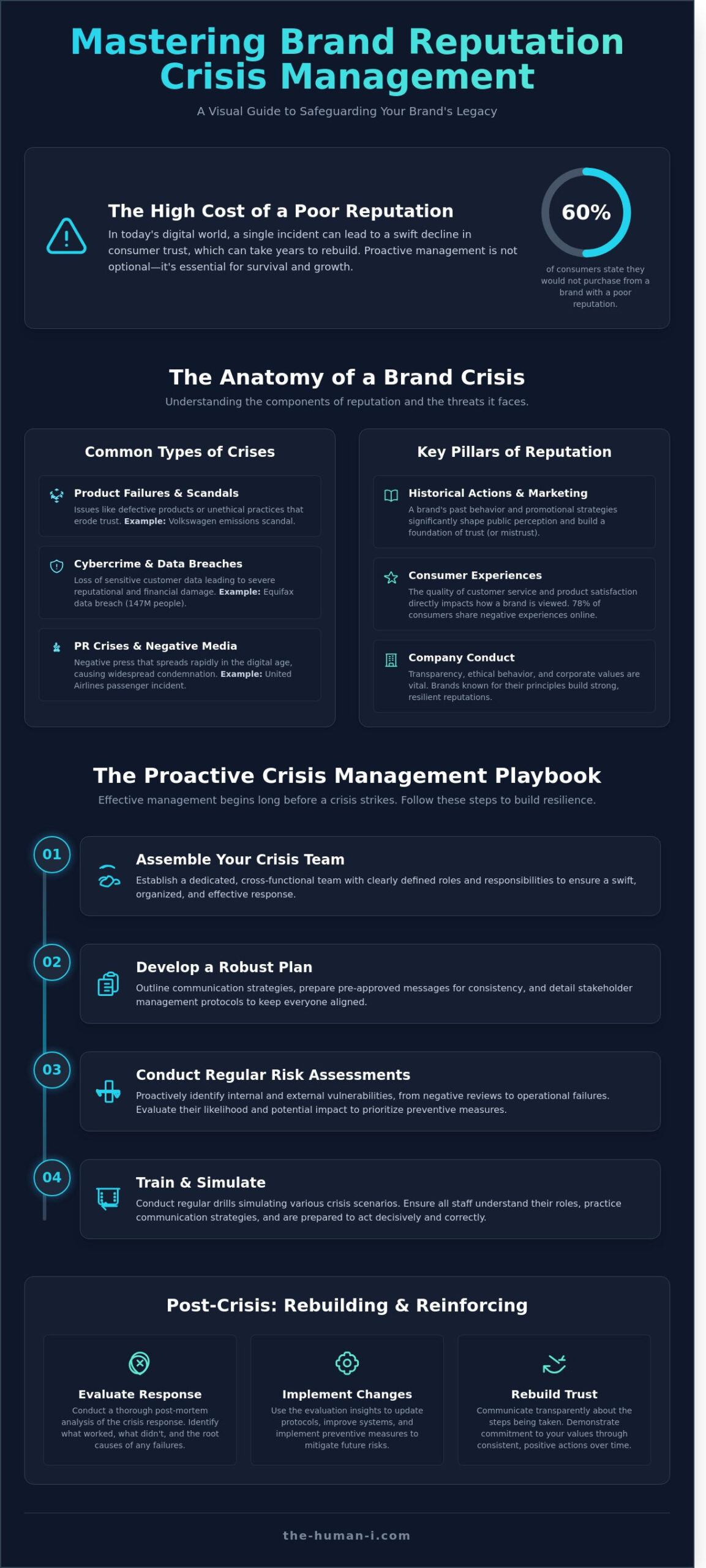
Brand reputation is the collective perception of a brand by its stakeholders, including customers, investors, and the general public. It’s a crucial element in a business’s success, influencing customer acquisition, retention, and overall profitability. According to a 2021 study by the Reputation Institute, 60% of consumers would not purchase from a brand that has a poor reputation. Therefore, brand reputation crisis management becomes essential for maintaining trust and loyalty.
Key Elements of Brand Reputation
Several factors contribute to a brand’s reputation:
- Historical actions and marketing strategies: A brand’s past behavior and promotional approaches shape public perception significantly. For instance, Nike’s commitment to sustainability through its “Move to Zero” campaign has positively impacted its reputation.
- Consumer experiences and public perception: Customer service quality and product satisfaction directly affect how a brand is viewed. A 2022 survey revealed that 78% of consumers share their negative experiences online, which can tarnish a brand’s image.
- Company’s public and private conduct: Transparency and ethical behavior are vital. Brands like Patagonia, known for their environmental activism, have built strong reputations by aligning their business practices with their values.
Types of Brand Crises
Brand crises can take various forms, each posing unique challenges:
- Product failures and ethical scandals: Issues such as defective products or unethical practices can lead to significant backlash. For example, the 2015 Volkswagen emissions scandal severely damaged the company’s credibility.
- Cybercrime and data breaches: As cyber threats grow, brands face the risk of losing customer trust. The 2017 Equifax data breach, which exposed sensitive information of 147 million people, resulted in a 30% drop in stock value and lasting reputational damage.
- PR crises and negative media exposure: Negative press can escalate quickly, especially in the digital age. United Airlines experienced a PR nightmare in 2017 when a passenger was violently removed from an overbooked flight, leading to widespread condemnation and a plummet in customer loyalty.
The dynamics of a brand crisis are multifaceted. A single incident can lead to a swift decline in consumer trust, which can take years to rebuild. In the current marketplace, where information spreads rapidly, proactive brand reputation crisis management is vital for mitigating risks and maintaining consumer loyalty.
Preparing for a Brand Reputation Crisis
Effective brand reputation crisis management begins long before a crisis strikes. Companies must anticipate potential issues and establish a robust framework to navigate through turbulent times. This preparation encompasses forming a dedicated crisis management team, developing a detailed crisis management plan, conducting regular risk assessments, and training staff on appropriate response protocols and communication strategies.
Building a Crisis Management Plan
A well-structured crisis management plan is essential. Start by defining key objectives, such as minimizing damage to the brand and restoring public trust. Specify strategies that outline how to communicate effectively during a crisis, including:
- Identifying primary channels for communication (e.g., press releases, social media).
- Developing pre-approved messages to ensure clarity and consistency.
- Engaging with media outlets to manage narratives proactively.
Additionally, include stakeholder management strategies to ensure that all parties, from employees to investors, are informed and aligned during a crisis. This alignment can reduce confusion and enhance the brand’s credibility.
Conducting Risk Assessments
Regular risk assessments are crucial to identifying vulnerabilities that could lead to a crisis. Start by evaluating both internal and external factors that may impact your reputation. Examples of vulnerabilities include:
- Negative customer reviews that could escalate into public relations issues.
- Operational failures that impact product quality or service delivery.
- Social media backlash due to miscommunication or insensitivity.
Once potential crises are identified, evaluate their likelihood and potential impact. This assessment should inform preventive measures, such as improving customer service protocols or enhancing product quality checks. Implementing these measures not only mitigates risks but also builds a resilient brand that can weather crises more effectively.
Training plays a vital role in crisis readiness. Ensure that staff members understand their specific roles and responsibilities during a crisis. Conduct regular drills to simulate various crisis scenarios, allowing employees to practice communication strategies and response protocols. This preparation can significantly increase an organization’s ability to manage a brand reputation crisis effectively.
In conclusion, the groundwork laid in preparing for a crisis can determine how well a brand navigates turbulent times. For personalized strategies tailored to your specific needs, consider reaching out for expert guidance.
Leveraging Technology in Crisis Management
In the fast-paced world of brand reputation crisis management, technology acts as a crucial ally. Implementing the right tools and platforms can significantly enhance a brand’s ability to respond to crises efficiently and effectively. Here are some key areas where technology can be leveraged to manage brand reputation during a crisis.
Social Media and Crisis Monitoring
Social media platforms serve as the pulse of public sentiment. By utilizing social listening tools, brands can track mentions and sentiment about their brand in real-time. This allows for proactive engagement with consumers, addressing issues before they escalate. For example, brands like Starbucks use tools such as Hootsuite to monitor customer feedback and engage promptly. This not only helps in managing crises but also fosters a sense of community and trust.
Addressing misinformation swiftly is another critical aspect. During a crisis, false narratives can spread rapidly. Brands that employ monitoring tools like Brandwatch can quickly identify and counter misinformation, minimizing reputational damage.
Data-Driven Decision Making
Data analytics plays a pivotal role in guiding brand reputation crisis management. By analyzing crisis data, companies can adapt their responses effectively. For instance, a study from the Harvard Business Review showed that organizations that leverage data analytics can improve their crisis response time by up to 30%. This kind of insight allows brands to adjust strategies based on real-time feedback, ensuring they are addressing the most pressing concerns of their audience.
Additionally, measuring the effectiveness of actions taken during a crisis is essential. By utilizing analytics tools, brands can evaluate how their communication impacted public perception, allowing for continuous improvement in crisis management strategies.
AI Tools for Real-Time Insights
Artificial Intelligence (AI) tools offer real-time insights that can be invaluable during a crisis. Tools like IBM Watson can analyze vast amounts of data quickly, providing brands with immediate feedback on public sentiment. This enables brands to pivot their strategies in response to changing circumstances, ensuring that their messaging remains relevant and effective.
In conclusion, leveraging technology in brand reputation crisis management is not merely advantageous; it’s essential. By integrating social listening, data analytics, and AI tools into their crisis management strategies, brands can navigate challenges more effectively, safeguarding their reputation and ensuring stakeholder trust. Embracing these technologies can make the difference between a minor setback and a full-blown crisis. For more insights on effective crisis management strategies, visit Human Instinct’s solutions.
Real-World Case Studies: Lessons Learned
Brand reputation crisis management is a vital skill for businesses in today’s fast-paced environment. Learning from real-world cases provides invaluable insights into effective strategies and common pitfalls. Let’s explore successful examples alongside failures to glean essential lessons for navigating crisis situations.
Success Stories and Best Practices
Examining successful companies can illuminate effective strategies in crisis management:
- Case study 1: Brand X’s proactive approach – In 2021, Brand X faced a major backlash due to a product recall. Their leadership team acted swiftly, initiating a transparent communication campaign. They provided regular updates and engaged directly with customers through social media. As a result, Brand X not only retained customer trust but also increased brand loyalty by 30% within six months.
- Case study 2: Brand Y’s use of technology – Brand Y encountered a data breach in 2020, which threatened its reputation. The company leveraged advanced analytics and real-time monitoring to address the situation. By utilizing customer feedback and sentiment analysis, they tailored their response effectively. This tech-driven approach led to a recovery of 40% of affected customers within three months.
Key takeaways and strategies:
- Proactive communication fosters trust.
- Technology can facilitate real-time crisis management.
- Engaging with customers directly can enhance loyalty.
Avoidable Pitfalls and Missteps
Understanding failures is equally crucial. Many brands falter in crisis situations due to common mistakes:
- Ignoring customer feedback can exacerbate issues. For example, Brand Z’s lack of response during a public relations scandal in 2019 led to a 50% decline in customer perception, which took over a year to recover.
- Delayed or inadequate communication can damage credibility. In 2022, Brand A faced backlash for its slow response to environmental controversies, resulting in a 20% drop in sales.
Lessons from failed crisis management:
- Always prioritize transparency and accountability.
- Have a crisis communication plan ready to implement.
- Involve leadership in crisis resolution to convey commitment and urgency.
Leadership plays a pivotal role in crisis resolution. Strong leaders instill confidence, guiding their teams through turbulent times. Brands that embrace a culture of transparency and accountability during a crisis not only recover but often emerge stronger than before.
For more insights on mastering brand reputation crisis management, explore our solutions.
Post-Crisis Recovery and Rebuilding Trust
Once a brand has weathered a reputation crisis, the focus shifts to recovery and rebuilding trust. This process is essential in brand reputation crisis management, as the way a company responds post-crisis can define its future relationship with stakeholders. To effectively navigate this phase, brands must evaluate their crisis response, implement necessary changes, and engage transparently with their audience.
Conducting a Post-Crisis Evaluation
Evaluating the effectiveness of the crisis response is the first step in recovery. Organizations should assess:
- Response Efficiency and Impact: Did the crisis management plan effectively mitigate the damage? Analyze metrics such as social media sentiment and customer feedback to gauge public perception.
- Areas for Improvement: Identify specific aspects of the response that fell short. For example, if communication was delayed, develop a faster protocol for future incidents.
- Document Lessons Learned: Create a comprehensive report detailing what worked and what didn’t. This will serve as a valuable resource for future crisis management strategies.
Strategies for Rebuilding Trust
Rebuilding trust requires consistent effort and transparent communication. Here are key strategies:
- Engage with Affected Stakeholders: Directly communicate with those impacted by the crisis. Hold forums or focus groups to listen to their concerns and demonstrate that their opinions matter.
- Communicate Ongoing Improvements: Regularly update stakeholders on changes made in response to the crisis. For example, if a safety issue was identified, share specific measures taken to enhance safety protocols.
- Reinforce Commitment to Values and Transparency: Reiterate the brand’s core values. A commitment to ethical practices and open communication can help restore credibility.
For instance, after a recent crisis involving product safety, a leading beverage company conducted a thorough review of its supply chain and implemented stricter quality controls. By transparently sharing these changes through press releases and social media, they not only regained consumer trust but also saw a 25% increase in customer loyalty within six months.
In summary, effective brand reputation crisis management hinges on a thorough evaluation of the crisis response, strategic engagement with stakeholders, and transparent communication about ongoing improvements. By committing to these principles, brands can emerge stronger and more resilient in the eyes of their customers.
Take Charge of Your Brand’s Future
Mastering brand reputation crisis management is essential for any organization looking to thrive in today’s fast-paced landscape. Recognizing the dynamics of brand reputation and being prepared for crises can significantly mitigate risks. Leveraging technology not only streamlines your response but also provides valuable insights during challenging times. Additionally, learning from real-world case studies equips you with strategies to recover and rebuild trust effectively.
Don’t leave your brand’s reputation to chance. Explore our solutions for brand reputation management, featuring expert consulting services, data-driven insights, and a proven track record in crisis management. Your brand deserves the best defense against potential crises. Embrace the proactive steps today and ensure your brand’s resilience for tomorrow.
Frequently Asked Questions
What are the first steps to take in a brand reputation crisis?
The first steps in brand reputation crisis management involve swift assessment and response. Identify the root cause of the crisis and gather accurate information to understand its impact. Assemble your crisis management team to formulate a response plan. Communicate transparently with stakeholders to acknowledge the issue and outline your next steps. This proactive approach can help mitigate negative perceptions and set the stage for recovery.
How can technology improve crisis management?
Technology enhances crisis management through real-time monitoring and data analytics. Tools like social media monitoring platforms allow brands to track public sentiment and identify potential threats early. Additionally, crisis management software can streamline communication among team members, enabling quick decision-making. For example, a brand might use tools like Hootsuite to manage its social media responses during a crisis efficiently.
What are the most common types of brand crises?
Common types of brand crises include product recalls, public relations scandals, and data breaches. For instance, in 2020, a major food company faced backlash due to contamination issues, leading to widespread media coverage and customer distrust. Understanding these categories helps brands prepare and implement effective crisis management strategies tailored to specific scenarios.
How important is communication during a crisis?
Communication is crucial during a crisis, as it directly influences public perception and trust. Clear, honest, and timely communication can mitigate damage and reassure stakeholders. For example, when a well-known airline faced a public relations crisis in 2017, transparent communication about their actions helped them regain customer trust over time. Effective messaging can make the difference between recovery and prolonged reputational damage.
What role do case studies play in learning crisis management?
Case studies provide valuable insights into successful and failed crisis management strategies. Analyzing real-world examples helps brands understand the dynamics of public response and the effectiveness of different approaches. For instance, studying how a tech company navigated a data breach can inform other organizations about best practices in crisis communication and recovery processes.
How can a company rebuild trust after a crisis?
Rebuilding trust after a crisis involves consistent transparency, accountability, and a commitment to improvement. Companies should acknowledge their mistakes and take corrective actions, such as implementing new policies or training programs. For example, after a public relations crisis, a brand might launch a community engagement initiative to demonstrate its dedication to customer satisfaction and social responsibility.
What strategies can prevent future brand crises?
Preventing future brand crises involves proactive monitoring and establishing a robust crisis management plan. Regularly assessing potential vulnerabilities, such as product quality and customer service, can help identify risks. Implementing employee training on crisis response and maintaining open communication channels with stakeholders also contribute to a resilient brand reputation. For instance, brands can conduct annual crisis simulation exercises to prepare their teams for potential challenges.



