


Your brand’s reputation is one of your most powerful assets, yet it often feels intangible-a concept discussed in boardrooms but disconnected from tangible results. This ambiguity makes it difficult to justify investment and even harder to develop a clear strategy for improvement. The real challenge for many leaders isn’t just knowing *that* they should track it, but understanding how to measure brand reputation in a way that provides genuine, actionable insight. If you feel lost in a sea of metrics or struggle to connect your efforts to the bottom line, it’s time for a new approach.
This is where data meets wisdom. We are moving beyond surface-level metrics like social media mentions and star ratings. Instead, we will provide a comprehensive strategic framework designed to uncover what truly matters. In this article, you will learn a clear process to measure, understand, and improve your brand’s standing. We will empower you to translate reputation data into a compelling narrative of business impact, allowing you to proactively shape customer perception and secure the executive buy-in your brand deserves.
Key Takeaways
- Go beyond simple awareness to understand how customer perception directly impacts business performance and growth.
- Discover a strategic framework that clarifies how to measure brand reputation, moving from high-level objectives to actionable data points.
- Understand the critical difference between quantitative metrics (the ‘what’) and qualitative insights (the ‘why’) to gain a complete view of your brand’s standing.
- Transform raw data into a strategic advantage by creating a continuous cycle of listening, learning, and actively improving your brand’s perception.
Beyond Buzz: Why Measuring Brand Reputation is a Business Imperative
In today’s transparent marketplace, your brand reputation is far more than just industry buzz. It is the collective perception-the sum of every interaction, review, and story-that customers, employees, and stakeholders hold about your company. This is fundamentally different from brand awareness. While awareness means people know you exist, reputation defines what you are known for. This distinction is critical, as reputation directly shapes customer trust and purchasing decisions. The old adage holds true: what you cannot measure, you cannot improve. This makes the question of how to measure brand reputation not just a technical challenge, but a strategic imperative for any business serious about its future.
The Tangible Impact on Your Bottom Line
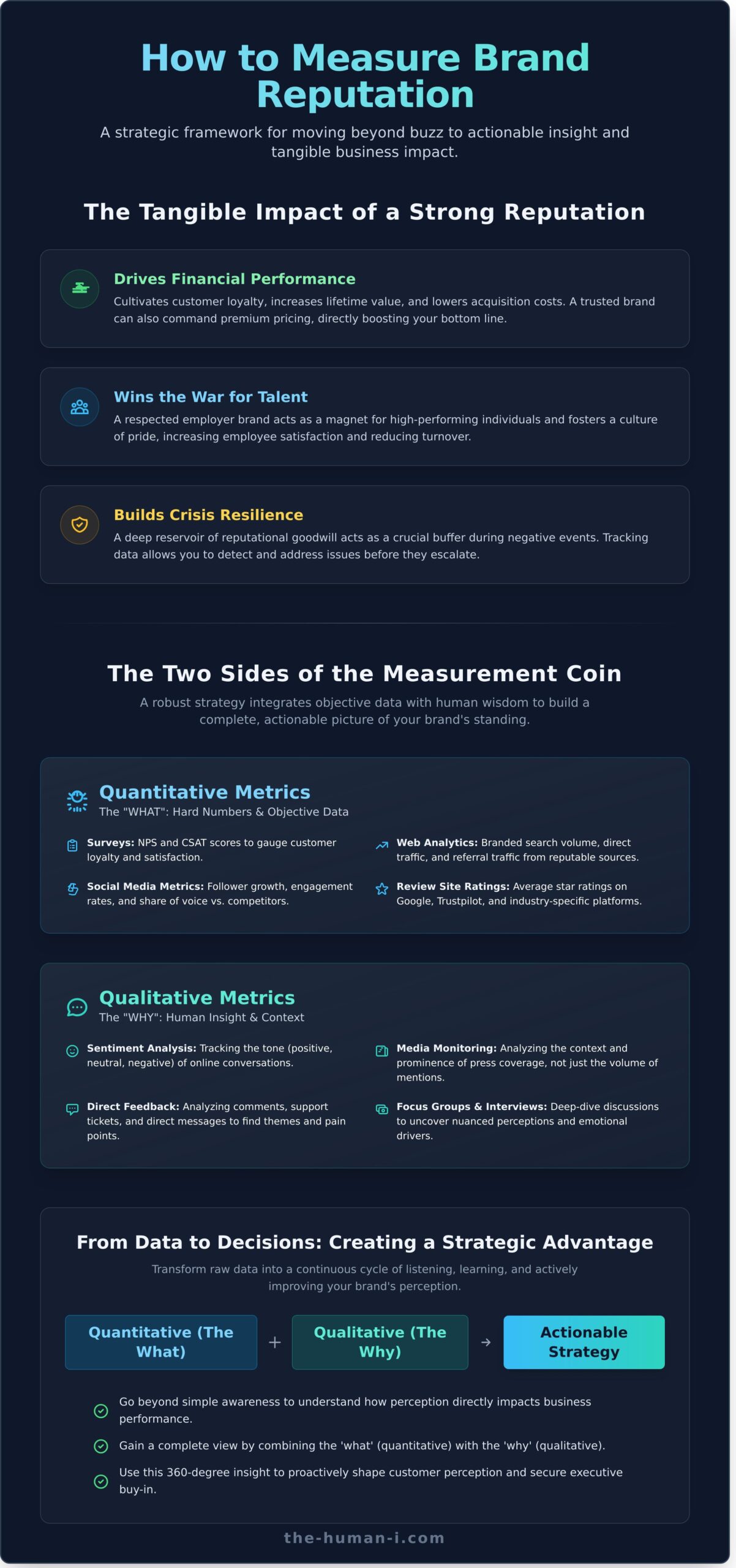
A strong reputation is a direct driver of financial performance. It cultivates deep customer loyalty, increasing lifetime value and creating powerful brand advocates. Furthermore, a positive perception lowers customer acquisition costs, as trust has already been established before the first marketing touchpoint. This trust also provides pricing power; research consistently shows a majority of consumers are willing to pay a premium for a product or service from a brand they believe will deliver a superior experience.
Winning the War for Talent
Your reputation’s influence extends well beyond your customer base-it is a critical asset in attracting and retaining top-tier talent. A respected employer brand acts as a magnet for high-performing individuals who are actively seeking workplaces with a positive public standing. Internally, a strong external reputation fosters a culture of pride and purpose, directly correlating with higher employee satisfaction and lower turnover rates.
Building Resilience Against Crises
In an unpredictable world, a deep reservoir of reputational goodwill acts as a crucial buffer during negative events. By consistently tracking reputational data, your organization can detect shifts in public sentiment early, allowing you to address potential issues before they escalate. Having this baseline enables a faster, more effective response, a core principle of strategic Reputation management that protects your brand equity when it is most vulnerable.
The Two Sides of the Coin: Quantitative vs. Qualitative Metrics
To truly understand your brand’s standing, you must look beyond a single number or a standalone comment. A comprehensive approach to how to measure brand reputation requires a dual perspective, much like two sides of the same coin. On one side, you have quantitative metrics-the hard data that tells you what is happening. On the other, you have qualitative metrics-the human insight that explains why it’s happening. A robust strategy doesn’t choose between them; it integrates data with wisdom to build a complete and actionable picture.
Quantitative Metrics: The Hard Numbers
Quantitative data provides the objective, measurable evidence of your brand’s performance. These are the figures that chart your progress and flag potential issues, offering a clear snapshot of your market position. Key indicators include:
- Surveys: Structured feedback like Net Promoter Score (NPS) gauges customer loyalty, while Customer Satisfaction (CSAT) scores measure happiness with specific interactions.
- Web Analytics: An increase in branded search volume and direct traffic signals strong brand recall. Referral traffic from reputable sources also reflects positive associations.
- Social Media Metrics: Track follower growth, engagement rates (likes, shares, comments), and your brand’s share of voice compared to competitors.
- Review Site Ratings: Your average star ratings on crucial platforms like Google, Trustpilot, or industry-specific sites provide a public benchmark of customer experience.
Qualitative Metrics: The Human Insight
While numbers tell part of the story, qualitative insights provide the narrative, context, and emotion behind the data. This is where you uncover the nuanced perceptions that shape your reputation. To gather this vital human intelligence, focus on:
- Sentiment Analysis: This involves tracking the underlying tone-positive, neutral, or negative-of online conversations about your brand. Automated tools now make it easier to monitor sentiment, which is often considered one of the Top 5 Metrics for understanding public perception at scale.
- Media Monitoring: Go beyond counting mentions. Analyze the context of press coverage and articles to understand how journalists and publications are framing your brand story.
- Customer Feedback: Read the comments. The open-ended responses in surveys and the detailed text in online reviews contain invaluable insights into your customers’ true experiences.
- Focus Groups & Interviews: Direct conversations allow you to probe deeper into specific feelings, beliefs, and attitudes, uncovering foundational insights that surveys often miss.
Ultimately, the most effective way to measure brand reputation is to create a feedback loop where quantitative data identifies trends and qualitative analysis explains them. A sudden drop in your NPS score is a number; reading customer comments to discover it was caused by a new policy is the wisdom you need to act.
A 4-Step Framework for Measuring Your Brand Reputation
Effective brand management requires more than sporadic surveys; it demands a structured, repeatable process that transforms data into strategic wisdom. This four-step framework provides a clear path for any business, moving from high-level objectives to concrete analysis. The goal is to establish a continuous feedback loop, allowing you to proactively shape perception and drive business growth.
Step 1: Define Your Objectives and KPIs
Before you measure, define what success looks like. Are you aiming to increase customer trust, be seen as an innovator, or enhance your employer brand? Crucially, these objectives must align with broader business goals. For example, an objective to improve trust should be tied to a Key Performance Indicator (KPI) like reducing customer churn. This stage establishes a baseline-a fixed point from which to measure all future progress.
Step 2: Choose Your Metrics and Channels
With clear objectives, the next step in understanding how to measure brand reputation is selecting the right metrics. A robust strategy uses a balanced mix of quantitative data (e.g., Net Promoter Score) and qualitative insights (e.g., sentiment analysis). Identify the channels where your audience is most active-be it LinkedIn, industry forums, or review sites. For a structured approach, the CASE framework for measuring brand reputation offers a comprehensive model. Focus on a manageable number of metrics to ensure your analysis remains focused.
Step 3: Select Your Tools and Assign Responsibility
The right tools are essential for efficient data collection, from social listening platforms to media monitoring services. Choose them based on your channels, metrics, and budget. Just as important, assign clear ownership. Designate a person or team to be responsible for gathering and validating the data, ensuring consistency and reliability. If you need expert guidance in shaping this strategy, explore our brand evaluation solutions to see how we empower businesses with clarity.
Step 4: Analyze Data, Generate Insights, and Report
Data’s power lies in interpretation. In this final step, analyze the information to identify trends, patterns, and anomalies. Why did sentiment spike last month? What is the recurring theme in negative feedback? By combining quantitative findings with qualitative context, you can tell a complete story about your brand’s health. Distill these findings into a clear report for stakeholders, complete with actionable recommendations that will inform your strategy and restart the feedback loop.
The Modern Toolkit: Key Channels and Platforms for Monitoring
Today’s brand reputation isn’t built in a boardroom; it’s forged in a dynamic and fragmented digital landscape of social feeds, news sites, and review platforms. While technology provides unprecedented access to these conversations, it’s crucial to remember that tools are enablers of a strategy, not the strategy itself. The real challenge in understanding how to measure brand reputation lies in selecting the right platforms that align with your industry and audience, and then turning that data into wisdom.
A comprehensive monitoring toolkit typically draws from four key areas, each providing a unique lens through which to view your brand’s standing.
Social Media Listening Platforms
These tools are your ears on the ground in the real-time world of social dialogue. Platforms like Brandwatch or Meltwater automate the tracking of brand mentions, competitor activity, and relevant keywords across social networks. They empower you to analyze public sentiment, identify emerging trends, and discover key influencers who are shaping the conversation around your brand and industry, providing immediate and unfiltered insight.
Media Monitoring Services
Beyond social chatter, it’s essential to track how your brand is portrayed in online news, print, and broadcast media. Services such as Cision or Muck Rack monitor a vast ecosystem of media outlets to capture every mention. This allows you to understand the narrative being shaped by journalists and publications, measure the impact of your PR efforts, and gauge your share of voice in the wider media landscape.
Survey and Customer Feedback Tools
While listening is vital, directly asking for feedback provides invaluable quantitative and qualitative data. Tools like SurveyMonkey or Qualtrics allow you to deploy targeted surveys to gather direct customer sentiment. Implementing Net Promoter Score (NPS) surveys within your product or post-purchase communications helps create a consistent benchmark for customer loyalty and satisfaction over time.
Online Review Management
For many businesses, customer reviews are a primary driver of reputation. Actively monitoring and responding to feedback on sites like Google, Yelp, or industry-specific platforms like G2 and Trustpilot is non-negotiable. Dedicated platforms such as Reputology consolidate reviews from multiple sources, making it easier to manage responses, identify operational issues, and demonstrate your commitment to customer service.
The optimal blend of these tools will vary, but a strategic approach ensures you capture a holistic view. Building the framework to interpret this data requires a deep understanding of human behaviour and market dynamics. At Human Instinct, we help brands uncover the wisdom within their data to shape a resilient and resonant reputation.
From Data to Decisions: Turning Reputation Insights into Action
Gathering data is only the first step. The true value of learning how to measure brand reputation lies not in the metrics themselves, but in the strategic decisions they empower. Measurement without action is an academic exercise; the goal is to create a virtuous cycle of listening, learning, and improving. This is where raw data is transformed into a powerful strategic asset, guiding your brand toward sustained growth and resilience.
Interpreting the Story Behind the Data
Effective analysis goes beyond surface-level numbers. It involves uncovering the “why” behind the “what”-connecting a sudden spike in positive sentiment to a specific marketing campaign or tracing negative feedback to a new customer service policy. It is the synthesis of data, insight, and wisdom that reveals the true narrative. Our team’s expertise lies in uncovering these deeper insights that turn complex data points into a clear, actionable story.
Developing a Strategic Response
Once you understand the story, the next step is to write the next chapter. A strategic response uses reputation insights to drive tangible business improvements. This means creating focused action plans to address identified weaknesses and, just as importantly, amplifying the positive themes and success stories that resonate most with your audience.
- Address Weaknesses: Use critical feedback to refine product features or enhance customer service training.
- Amplify Strengths: Weave positive customer stories and themes into your marketing and communications.
- Inform Strategy: Allow reputation data to guide future business decisions, from product development to market positioning.
Closing the Loop and Communicating Change
The final, crucial step is communication. Share your findings and action plans with key stakeholders across the company to ensure organisational alignment. More importantly, communicate relevant improvements back to the customers who provided the initial feedback. This simple act closes the loop, demonstrating that you are listening and building profound trust. Ready to build a robust strategy that turns insight into impact? Contact our experts to begin the conversation.
From Data to Wisdom: Mastering Your Brand Reputation
Ultimately, your brand’s reputation is not a passive outcome but a strategic asset you can actively shape. As we’ve explored, this requires moving beyond surface-level buzz to a structured framework that balances both quantitative data and qualitative sentiment. Understanding how to measure brand reputation is the critical first step, but the real transformation happens when you translate those findings into decisive action, protecting your brand’s value and uncovering new opportunities for growth.
Turning complex data into clear, actionable strategy is where insight meets execution. We provide data-driven insights from seasoned brand strategy experts, using proven frameworks for B2B and B2C clients across diverse sectors to uncover the wisdom within your data. Ready to transform brand data into strategic wisdom? Discover our approach.
The journey from measurement to mastery begins with a single, decisive step. Take it today, and empower your brand to not only be heard, but truly understood.
Frequently Asked Questions
What is the difference between brand reputation and brand awareness?
Brand awareness is a measure of recognition-whether your audience knows your brand exists. Brand reputation, however, is a measure of perception-the collective opinion, feelings, and trust your audience holds for you. Think of it this way: awareness is being known by many, while reputation is being known for something meaningful and positive. A strong strategy addresses both, but reputation is where true brand equity is built and sustained over time.
How often should you measure brand reputation?
We advise a dual approach for a complete strategic picture. Implement continuous, real-time monitoring of social media and news mentions to catch shifts as they happen. Alongside this, conduct a deeper, more comprehensive analysis on a quarterly or bi-annual basis. This rhythm allows you to track long-term trends and the impact of your strategic initiatives. During a major campaign or crisis, this frequency should increase to daily or even hourly tracking to maintain control.
Can you measure brand reputation effectively without expensive tools?
Yes, effective measurement is about insight, not just investment. While enterprise tools offer scale, you can uncover powerful data with simpler methods. Set up Google Alerts for brand mentions, consistently monitor review sites, and analyze social media comments and hashtags. Simple customer surveys can also yield profound insights. Understanding how to measure brand reputation effectively begins with a strategic process, not necessarily a costly platform, to gather and interpret this valuable customer data.
What are the three most important KPIs for brand reputation?
To gain a clear, data-driven perspective, focus on these three core KPIs. First, Sentiment Analysis, which gauges the emotional tone (positive, negative, neutral) of online conversations. Second, Net Promoter Score (NPS), which directly measures customer loyalty and their willingness to advocate for you. Finally, Share of Voice (SOV) provides crucial context by comparing your brand’s presence to that of your key competitors. Together, these metrics shape a powerful narrative of your brand’s standing.
How do you start repairing a damaged brand reputation?
Repairing a reputation begins with a deliberate, three-step strategy. First, acknowledge the issue publicly and transparently; this builds a foundation of trust. Second, listen intently to customer feedback through social channels and direct surveys to truly understand the core concerns. Finally, act decisively by developing and communicating a clear plan to address the root cause. This structured approach moves beyond a simple apology to demonstrate genuine commitment to rectifying the problem.



